In our current world, we are nearly always “on.” We deal with long hours sitting at our desks, constantly exposed to the blue light of our screens, and silently affected by the “do more, be more” culture we live in. Our bodies may be able to say “goodbye” to the day, but our minds keep on working, racing toward the next goal before we have even completed the one in front of us.
Does this sound like you? If you feel like you are always in a race but never reaching the finish line, you are in good company. We have become so focused on showing ourselves to the outside world that we have almost forgotten the quiet intelligence inside us. Achieving true yoga for inner balance starts with recognizing this exhaustion and choosing to pause.
Mr. Rubathsingh, Yoga Specialist at Retreat Park am See Nattika Ayurveda, suggests that this is precisely where the real yoga journey begins.
Many of us think of yoga as a series of complex poses or extreme physical flexibility. While movement is a vital part of the process, the heart of the practice is actually a lifestyle. It’s about how we meet the world and how we cultivate yoga for inner balance in our emotional and mental lives.
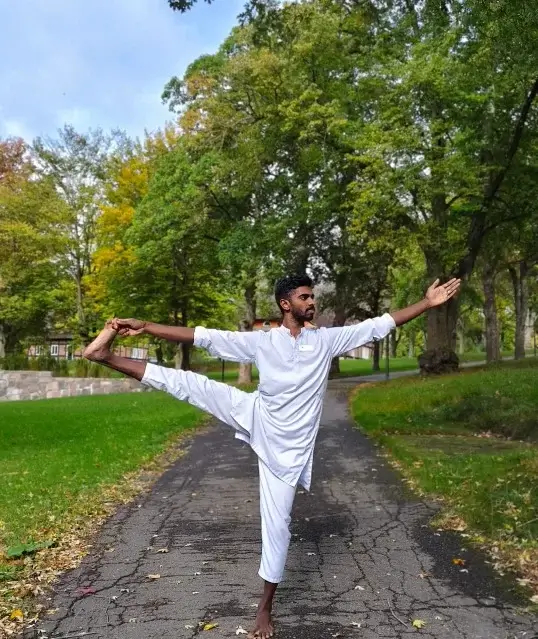
Mr. Rubathsingh points out the two basic ideas from the ancient Yoga Sutras, which can completely transform our attitudes toward daily stress:
You don’t need an hour-long class to start experiencing yoga for inner balance. One of the most effective tools for re-centering the mind is Nadi Shodhana, or Alternate Nostril Breathing. This practice doesn’t just help you breathe better; it literally harmonizes your nervous system.
Here is how you can try it right now:
1. Find Your Seat: Sit comfortably with your spine tall and straight.
2. The Hand Position: Rest your left hand on your knee. Use your right hand to gently close your nostrils, using your thumb for the right side and your ring finger for the left.
3. The Flow: * Close the right nostril, inhale deeply through the left.
4. Repeat: Continue this cycle for about five minutes.
This simple rhythm acts as a “reset button” for your brain, clearing mental fog and bringing a sense of quiet energy to your day.
Integrating yoga for inner balance into your life doesn’t promise a perfect, stress-free existence. It doesn’t make our deadlines disappear or our responsibilities smaller. Instead, it makes us stronger.
It cultivates a “mindful presence”, a sense of poise that allows us to face the ups and downs of life with clarity rather than chaos. It isn’t about changing the world around you; it’s about transforming the person who experiences it. By making yoga for inner balance a daily priority, you are simply remembering truly who you are.
The final destination of yoga for inner balance is actually not the case to run away from your life but rather, to be more aware of it. No matter if you are dealing with a very demanding job or just the quiet expectations of home life, these old practices still serve a purpose and become a way back to your inner self. By engaging yourself into small but daily acts of awareness, such as doing Nadi Shodhana for a few rounds or taking just a second to think about Abhyasa, you slowly build a stronghold against the external stressors that no one can break.
Be aware that perfection is not the prerequisite to take the first step. Just be there! Rubathsingh is a good example of the fact that yoga does not mean turning into something else but rather uncovering the tranquility that was always there in you.
While a full lifestyle change takes time, practices like Nadi Shodhana (Alternate Nostril Breathing) can provide immediate relief. Most people feel a shift in their nervous system, moving from “fight or flight” to a state of calm, within just 3 to 5 minutes of focused breathing.
If one nostril is completely blocked due to a cold or allergies, it is best to avoid the physical practice of closing the nostrils. Instead, you can practice “mental” Nadi Shodhana, where you visualize the breath flowing in and out of alternate sides. This still helps cultivate yoga for inner balance through focused visualization.
Not at all. As Mr. Rubathsingh explains, yoga is a lifestyle, not just a physical exercise. While asanas (poses) help release muscle tension, the core of the practice is about awareness and breath. If you can breathe and observe your thoughts, you can practice yoga.
Early morning is often considered the “golden hour” for yoga because the world is quiet and the mind is fresh. However, practicing in the evening can be a wonderful way to “unplug” from screen time and transition into a restful sleep. The most important thing is consistency (Abhyasa).
Abhyasa encourages you to stay consistent with your self-care routines regardless of how busy you are. Vairagya helps you work with full focus and sincerity without being paralyzed by the “silent pressure” of results. Together, they create a mental framework that prevents burnout.