The human body is far more than bones, muscles and organs. According to the ancient healing traditions of India, it exists as a layered system spanning the physical, energetic and pranic dimensions. Within this energy body flow more than 72,000 channels of life force, called Nadis. Wherever these channels intersect, they form concentrated points of energy. These are the chakras.
The word “chakra” comes from Sanskrit and means “wheel” or “circle.” Each chakra spins in a constant circular motion, drawing in prana, the vital life force, from the surrounding environment. When energy flows freely through all seven centers, we tend to feel grounded, healthy and connected to ourselves. When one or more chakras become blocked or overactive, that imbalance often surfaces as emotional tension, physical discomfort or a persistent sense that something is off.
This guide covers what the 7 chakras are, what each one means, how to recognize a blockage, and which practices in Yoga, Pranayama and meditation support each energy center.
What Are the 7 Chakras?
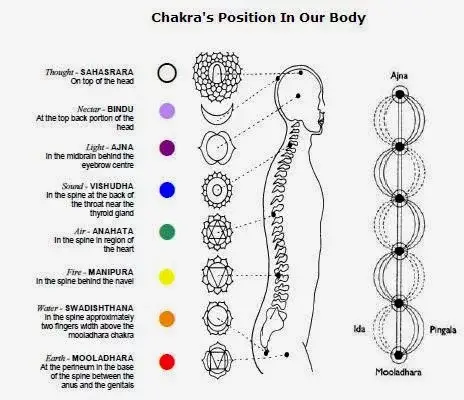
The seven main chakras run along the spine from the base (the coccyx) up to the crown of the head. They are connected through the Nadi network that distributes prana throughout the body. Each chakra corresponds to a specific color in the visible spectrum, a natural element, a seed mantra (Bija), a lotus symbol with a characteristic number of petals, and a core life theme.
The lower chakras tend to vibrate at slower frequencies and govern our physical and instinctual needs. The upper chakras vibrate at higher frequencies and relate to our emotional, mental and spiritual dimensions. Together, all seven form a complete map of human experience.
| Chakra | Sanskrit Name | Location | Color | Mantra | Core Theme |
|---|---|---|---|---|---|
| 1. Root Chakra | Muladhara | Base of the spine | Red | LAM | Grounding, safety, survival |
| 2. Sacral Chakra | Svadhisthana | Below the navel | Orange | VAM | Creativity, emotions, pleasure |
| 3. Solar Plexus Chakra | Manipura | Upper abdomen / navel | Yellow | RAM | Willpower, confidence, identity |
| 4. Heart Chakra | Anahata | Center of the chest | Green | YAM | Love, compassion, connection |
| 5. Throat Chakra | Vishuddha | Throat / neck | Blue | HAM | Communication, truth, expression |
| 6. Third Eye Chakra | Ajna | Between the eyebrows | Indigo | OM | Intuition, wisdom, inner clarity |
| 7. Crown Chakra | Sahasrara | Crown of the head | Violet / White | AUM | Enlightenment, pure consciousness |
The Root Chakra
The first chakra sits at the base of the spine, at the perineum. It is the foundation of the entire energy system and is associated with our most primal needs: physical safety, a sense of belonging and the instinct to survive. When Muladhara is balanced, we feel stable, capable and grounded in the body. When it is blocked, anxiety, financial worry and a pervasive feeling of instability often emerge.
The Sacral Chakra
The second chakra is located in the pelvic area, just below the navel. It governs creativity, sensuality, emotions and our capacity for joy. When it is open and balanced, we move through life with fluidity, connect easily with others and find genuine pleasure in daily experience. Blockages here often appear as creative blocks, emotional suppression or a lack of motivation and passion.
The Solar Plexus Chakra
The third chakra is positioned between the navel and the sternum, at the solar plexus. It is the seat of personal power, self-esteem and the will to act. A balanced Manipura allows us to set goals with confidence and follow through. When out of balance, we may experience low self-worth, excessive stress, digestive issues or a tendency to seek control over others.
The Heart Chakra
The fourth chakra sits at the center of the chest, near the heart and lungs. It is the bridge between the three lower, earth-oriented chakras and the three upper, spiritually-oriented ones. Anahata governs our capacity to give and receive love, feel compassion and build meaningful connections. Imbalances show up as emotional withdrawal, bitterness, fear of intimacy or a sense of disconnection from others.
The Throat Chakra
The fifth chakra is located in the throat. It is the energy center for authentic communication, self-expression and truth. When Vishuddha is open, we can speak and listen with clarity, express creativity through voice and writing, and say what we mean with confidence. Blockages often manifest as difficulty communicating, shyness, a tendency to hold back opinions or recurrent issues in the throat, neck and jaw area.
The Third Eye Chakra
The sixth chakra sits between the eyebrows, slightly above the nose bridge. It is commonly called the Third Eye and is understood as the seat of intuition, inner wisdom and the ability to see beyond surface appearances. When Ajna is balanced, thinking is clear, decisions come from inner guidance rather than external pressure, and the connection between mind and body feels coherent. Imbalances may show as headaches, overthinking, difficulty concentrating or a loss of trust in one's own instincts.
The Crown Chakra
The seventh chakra rests at the very top of the skull. Unlike the other six, which represent intersections of energy channels, the Crown Chakra is described as a pure opening: a gateway to universal consciousness and the source of all the other chakras. When Sahasrara is harmonized, we experience deep inner stillness, gratitude and a quiet sense of unity with life. Blockages can appear as existential emptiness, spiritual disconnection or a chronically negative view of existence.
Every chakra is sensitive to the conditions of our daily life: stress, unresolved emotions, lifestyle habits and significant life events can all affect the flow of energy through any given center. A chakra can be underactive (blocked) or overactive, and both states create imbalance.
Fear is one of the most common causes of chakra blockage. When we feel threatened or anxious, the chakras contract, restricting the free movement of prana. The resulting blockage then tends to amplify the same feelings that created it, making the cycle self-reinforcing. Releasing these blockages, through movement, breath and conscious awareness, is the core purpose of chakra work.
Signs of imbalance vary by chakra. A blocked Root Chakra often brings persistent anxiety, financial insecurity or a feeling of physical instability. A blocked Heart Chakra may show as emotional numbness, resentment or difficulty trusting others. An overactive Solar Plexus Chakra can manifest as aggression, excessive need for control or chronic stress.
There is no single method for balancing the chakras. Traditional and contemporary approaches both offer a range of practices, and the most effective approach usually combines several. The most widely used methods include the following.
In the Ayurvedic tradition, these practices are embedded in a broader understanding of whole-body health. Treatments such as Panchakarma, Ayurvedic full-body massage and a deeper study of Ayurveda philosophy complement chakra work in profound ways.
The state in which all seven chakras are simultaneously open and balanced is described in the yogic tradition as rare and deeply significant. When prana flows freely through each center without obstruction, the experience on every level shifts noticeably. Physically, people report sustained vitality and a strengthened immune response. Emotionally, greater openness, compassion and equanimity become more natural. Mentally, thought feels clearer and decision-making more aligned with one’s deeper values.
On the spiritual level, the tradition describes this state as progressive self-realization: a gradual dissolving of the sense of separation between the individual and the wider whole. This is not a fixed destination but an ongoing process of awareness and cultivation. Consistent daily practice, even in small amounts, is the most reliable path toward this experience.
The seven chakras offer a holistic map of the human being, one that encompasses physical health, emotional life and spiritual development as a single unified system. Chakra work through Yoga, Pranayama and meditation is a practical, body-based method for increasing self-awareness, releasing stored tension and cultivating lasting balance.
Whether you approach the chakra system as a spiritual framework or simply as a structure for mindful movement and breathwork, the practices it encompasses are well-supported by both ancient wisdom and modern wellness research. The healing of body, mind and soul begins with showing up consistently, breath by breath and posture by posture.
The 7 chakras are the seven main energy centers of the human body, located along the spine from the base (coccyx) to the crown of the head. Rooted in the ancient Indian traditions of Yoga and Ayurveda, they are understood to govern physical, emotional and spiritual well-being. Each chakra is associated with a color, an element, a Bija mantra and a specific life theme. From the base upward, the seven chakras are: Muladhara (Root), Svadhisthana (Sacral), Manipura (Solar Plexus), Anahata (Heart), Vishuddha (Throat), Ajna (Third Eye) and Sahasrara (Crown).
A blocked chakra typically shows up as recurring physical symptoms, emotional patterns or behavioral tendencies connected to that energy center. A blocked Root Chakra often brings anxiety, financial insecurity or a persistent feeling of physical instability. A blocked Heart Chakra may manifest as emotional withdrawal or difficulty forming trusting relationships. General signs of chakra imbalance include chronic fatigue, emotional numbness, recurring tension in specific parts of the body and a sense of stagnation in certain areas of life. Fear is widely recognized as one of the primary triggers of chakra blockage, as it causes the energy centers to contract and restrict prana flow.
The most effective approach to opening the chakras combines chakra-specific yoga asanas, Pranayama breathwork, meditation and mantra recitation. Each chakra responds to different practices: the Root Chakra responds well to grounding standing poses and the mantra LAM; the Heart Chakra opens through backbends and the mantra YAM; the Crown Chakra is best supported through silent seated meditation and the mantra AUM. Complementary tools such as aromatherapy, gemstones and Ayurvedic bodywork can also support the process. Consistency of practice matters more than intensity in any single session.
When all seven chakras are open and prana flows freely through each center, the yogic tradition describes a state of deep balance across all dimensions of being. Physically, energy levels rise and resilience improves. Emotionally, there is greater capacity for compassion, inner calm and ease in relationships. Mentally, clarity of thought and alignment with one’s deeper values become more accessible. Spiritually, this state is described as progressive self-realization, a gradual experience of unity rather than a fixed endpoint. Maintaining this state requires ongoing practice and mindful attention to the body, breath and mind.